The Travelling Herstorian Investigates…
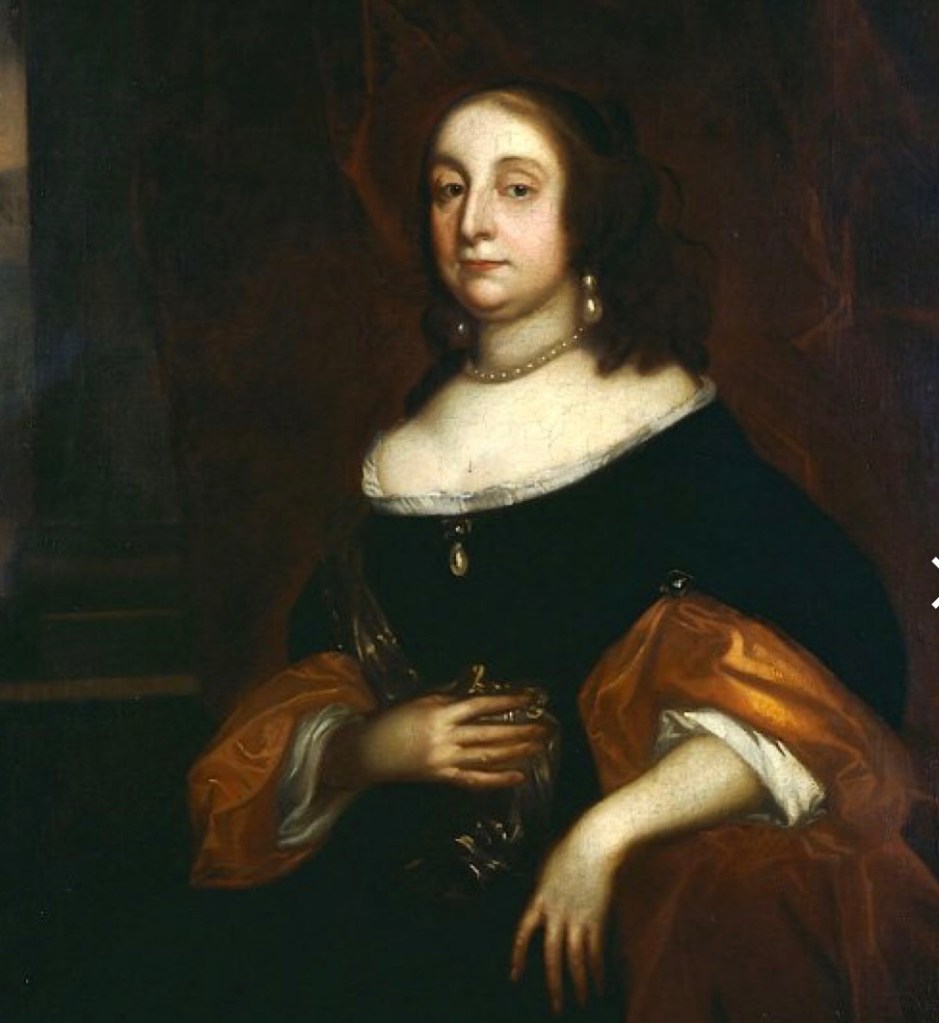
A few years ago, when I started this blog, I stated that one 17th century woman I’d be interested in knowing more about was Elizabeth Cromwell (and in the traditional fashion of women only having an identity in relation to their husbands or fathers, I’ll explain…) who was the wife of Oliver Cromwell, Lord Protector. Last month, I was provided with the ideal opportunity at the village of Northborough, near Peterborough, Elizabeth’s final resting place.
The Event
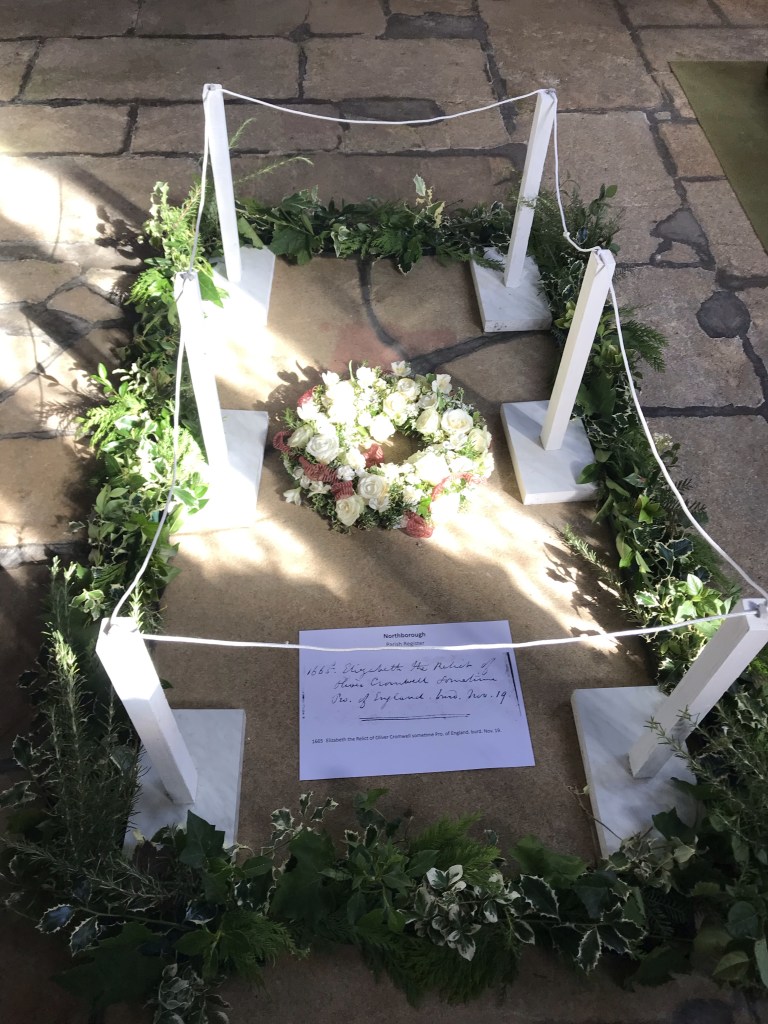
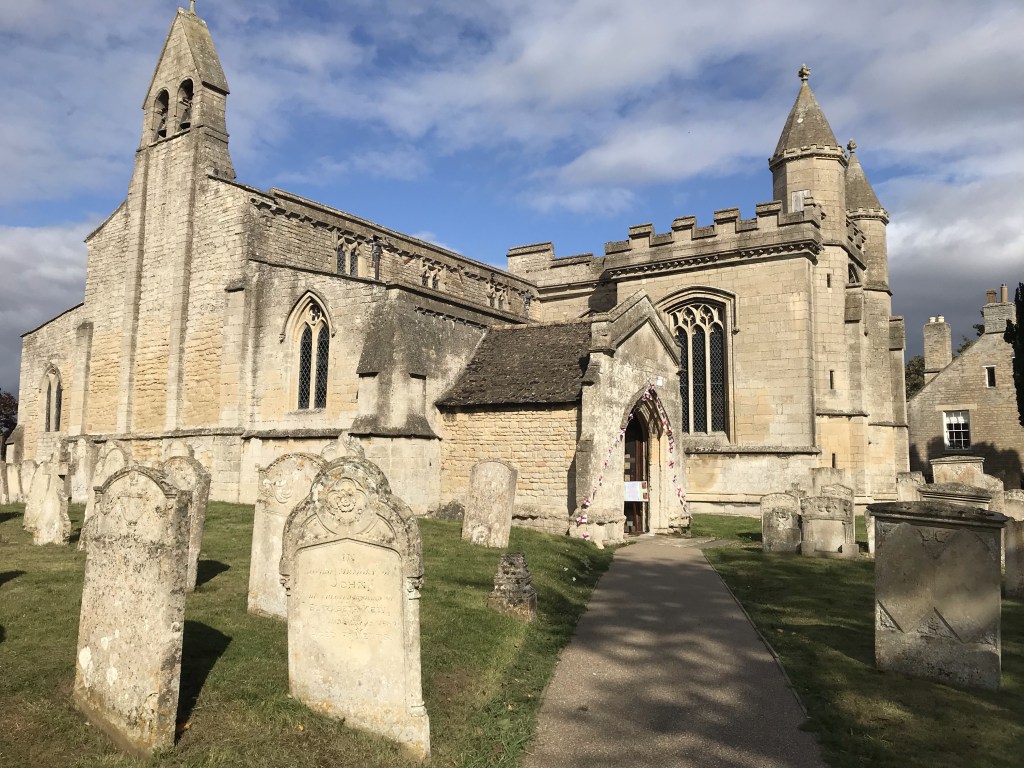
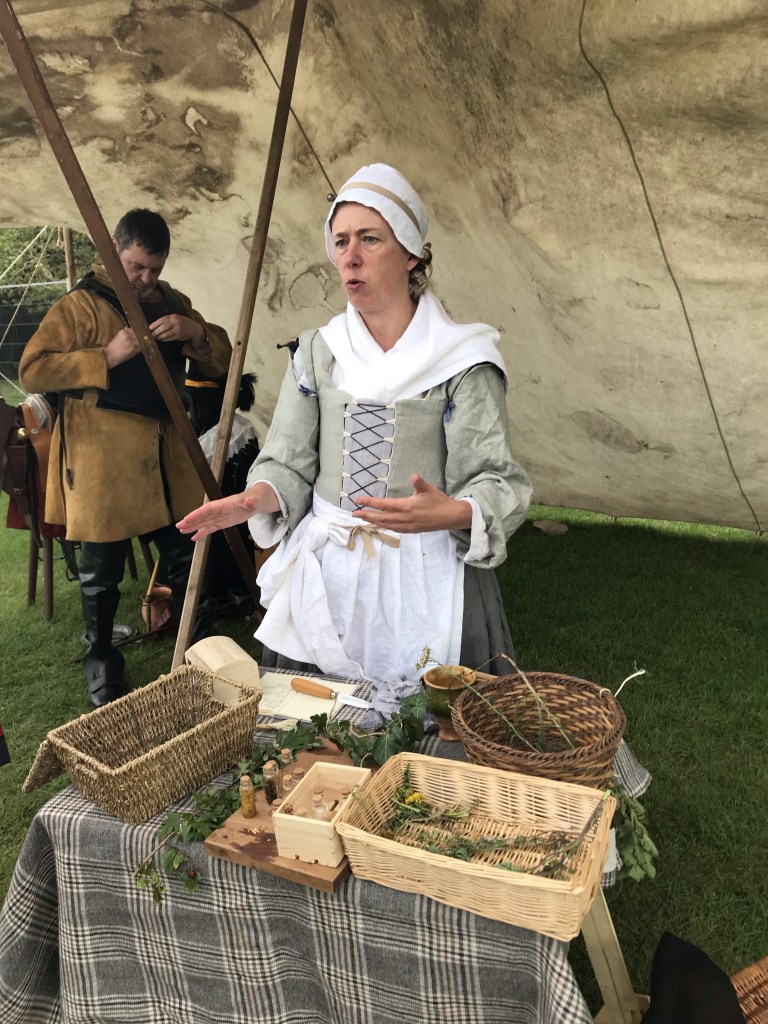
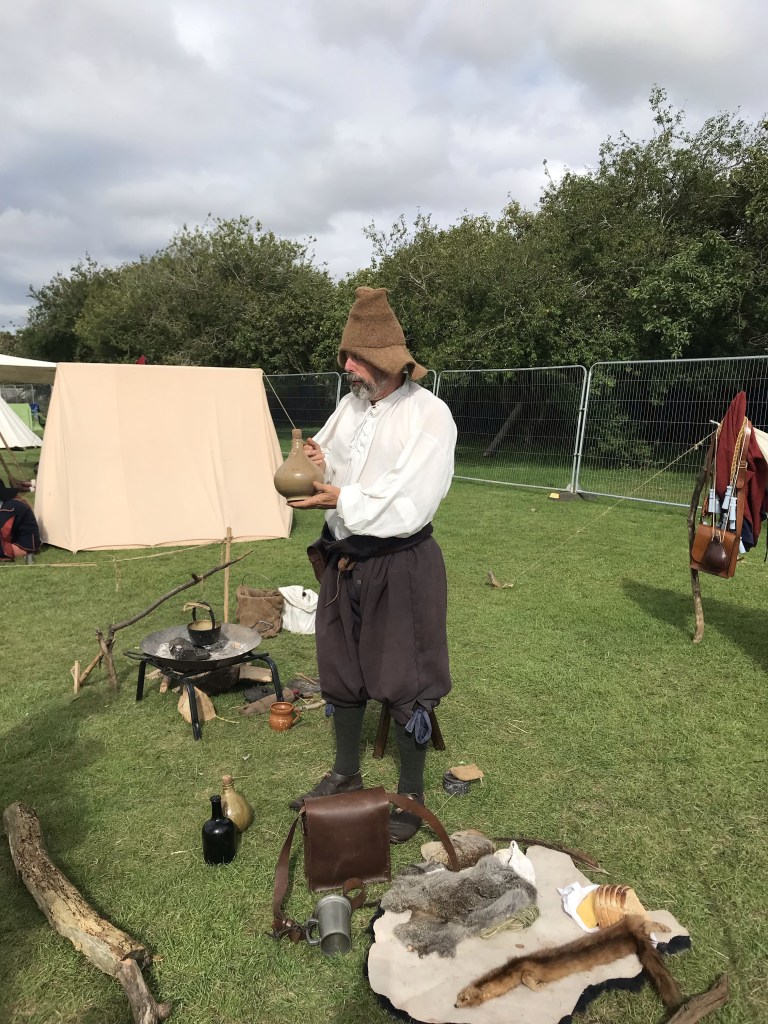
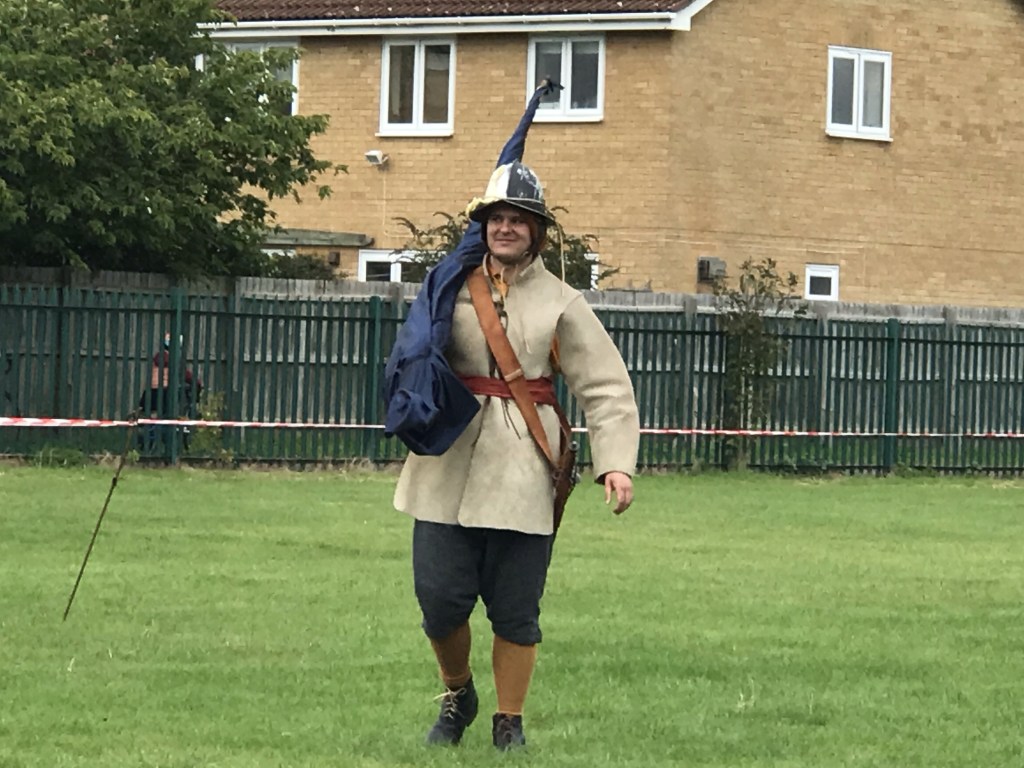
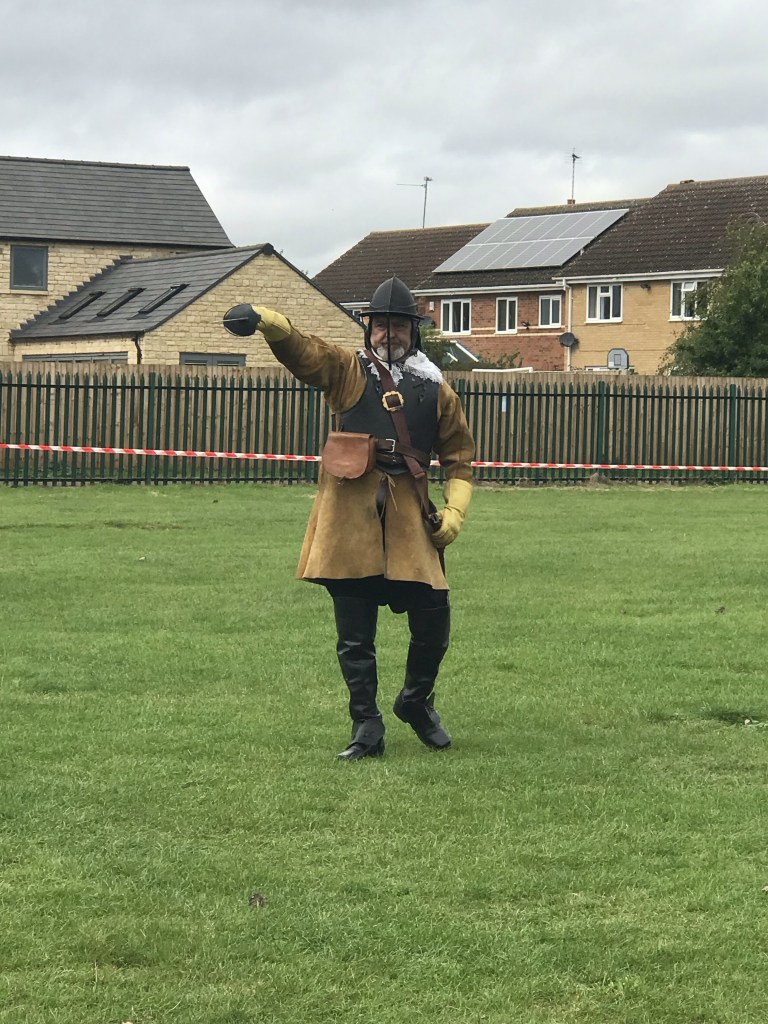
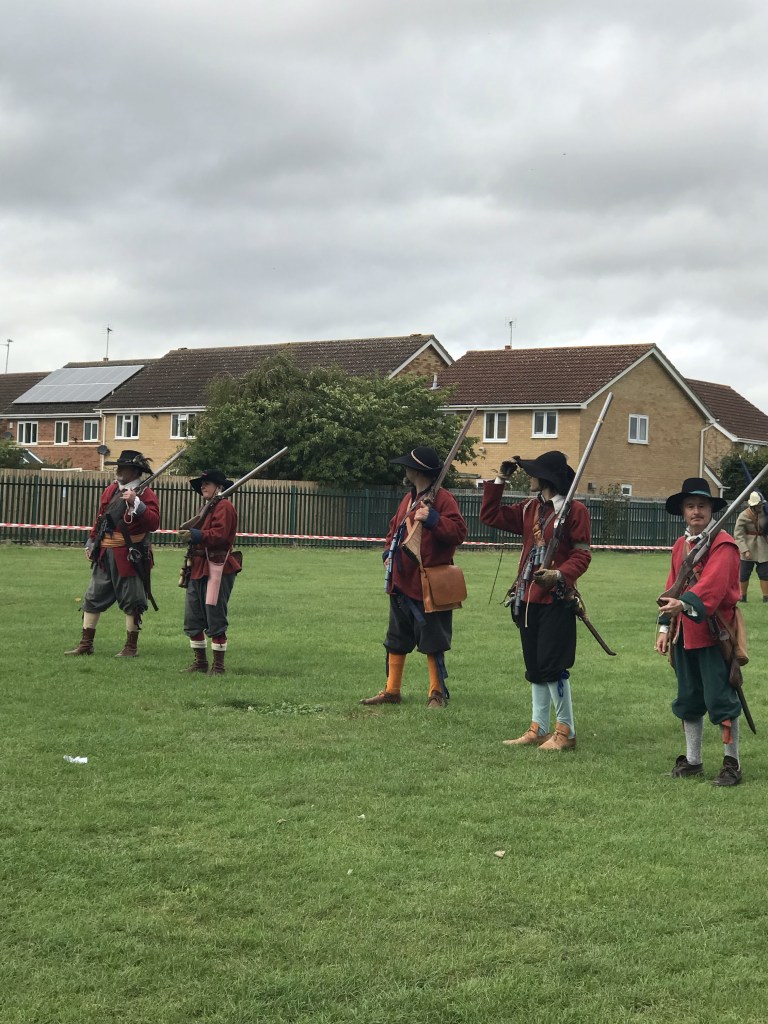
Elizabeth Cromwell Remembered was a two day commemoration to Elizabeth Cromwell and a fundraising event for St Andrew’s Church, Northborough where Elizabeth’s remains are buried. The Sealed Knot, an extremely knowledgeable and hugely entertaining reenactment group, laid a wreath on the memorial of Elizabeth in the Church and demonstrated military practices on the Primary School field. Northborough Women’s Institute provided a warm welcome, drinks and cakes in the church, where a small exhibition and the memorial stone to Elizabeth could be seen. Stuart Orme, the curator of the Cromwell Museum (based in Huntingdon) gave a talk on ‘The Court and Kitchen of Elizabeth Cromwell’ on Saturday evening in the church and was on hand on both days to answer any questions about Elizabeth (and Cromwell himself, of course). A replica of Cromwell’s hat was available to try on and Elizabeth Cromwell’s Cookbook was available to buy (more on this later). Here’s a selection of photos from the day I visited.
The Accessibility
The event was well organised, with dedicated disabled parking close to where the event was taking place and because it was a school field the terrain was flat and well cared for. It was good to see several wheelchair users enjoying the event. I believe that there was an accessible toilet available in the school.
My only comment would be that ideally there should have been more ‘seating areas’ available around the arena (bails of straw perhaps?), just so weary legs don’t have to stand while watching the performances. (Not everyone with disabilities is wheelchair bound.)
The Herstory – Elizabeth Cromwell
Now, I don’t think the National Curriculum or the GCSE syllabuses look at the English Civil Wars. Neither does it like to mention, (as happened with the French Revolution) that in England there was a time when the ruling King Charles I, was decapitated and England for a while became a republic. Regardless of what you think about Oliver Cromwell and the political upheaval that surrounds his Protectorate, that isn’t up for discussion here. The topic of today is Elizabeth Cromwell, the woman behind the man.
Elizabeth Bourchier was born in 1598, daughter of Sir James Bourchier of Felsted, Essex, and Frances (nee Crane). She was the eldest of 12 children, having nine brothers and two sisters). Her father was a successful businessman in the fur and leather trades and was knighted in 1603 by James I. We do not know anything about Elizabeth’s younger years but from archive material we know she was literate and with with her father’s social standing we can assume she received some level of education.
Elizabeth and Oliver Cromwell married in August 1620 at St Giles Church, Cripplegate. As with her early years, we know nothing of how they met or their courtship. In the first eight years after their marriage, (between 1621 and 1629) Elizabeth gave birth to six children; four boys and two girls. This was fairly typical of the time (remember Elizabeth had been one of 12 siblings) and the gaps between each child suggests that Elizabeth nursed her children herself. Having been perpetually pregnant and raising her children, after three year pause, it would appear Elizabeth suffered from either a still birth or a birth with complications, as a son, James, was born and buried within 2 days in 1632. After a further five year break from birthing, Elizabeth give birth to two more daughters within the space of 20 months with her last daughter being born in 1638. Elizabeth would have been 40 at the time.
Between 1620 and 1636, Elizabeth and Oliver’s economic circumstances fluctuated from comfortable living in Huntingdon, to a more yeoman-like lifestyle in St Ives. An inheritance from Oliver’s uncle, in 1636 saw their circumstances change once again and a move to Ely followed in 1640 and a rise in Oliver’s political career.
Bearing in mind that Oliver’s political career meant he was away for long periods of time, from the few surviving letters between them, it would seem that they were happy and faithful to one another.
Now after the execution of King Charles I, (Oliver’s signature was the third on the death warrant) in 1648, Oliver, was effectively King of England in all but name (he refused the offer of Kingship), which threw Elizabeth into a position (effectively queen) she obviously hadn’t banked on when she married Oliver. Royalist propaganda was quick to point out how neither of them were cut out for the job, not being from noble stock. However, Oliver stayed in power for 5 years. Several bereavements (including the death of Oliver’s favourite daughter, Elizabeth at the age of 29, probably as a result of complications after childbirth) and illnesses followed in a short space of time and Cromwell himself died in 1658. His son Richard gave up the Protectorate after 9 months and Charles II was restored to the throne.
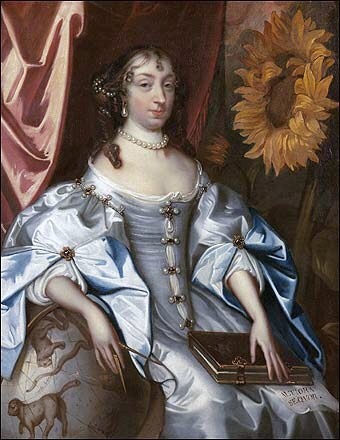
Now widowed at the age of 60, what is a gal supposed to do? By all intents and purposes, rightly or wrongly, your husband, once Lord Protector of the Commonwealth of England, Scotland and Wales, is now viewed as a traitor and his body is exhumed and horribly treated as such.
Elizabeth was accused of trying to steal some “royal” stuff and she petitioned to the King that she really hadn’t been involved in political affairs at all when her husband had risen to power. Whatever the restored King thought of her, luckily (or a political move by the king) she was allowed to live and retired quietly to Northborough Manor, with her son-in-law, John Claypole, her daughter Elizabeth’s widower. No doubt helping out with the grandchildren and keeping her head down and out of politics.
As with most women lost to history, we have very little information about Elizabeth as a person, and even less directly from her about her life and how she felt about her situation.
A publication, Joan Cromwell’s Cookbook was published in 1664, by Thomas Milbourn for Randal Taylor. The Cromwell Museum hold a copy of it and a version of it can be viewed here and a recently published transcription can be bought from the museum itself.
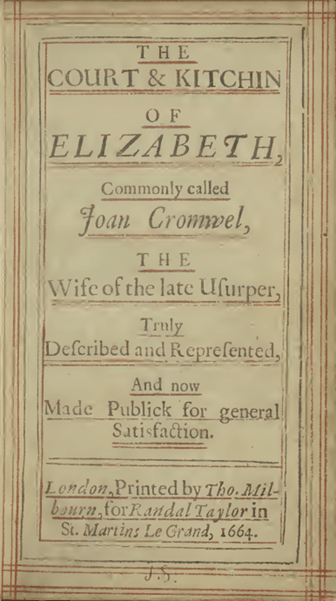
The naming of Elizabeth as Joan is a deliberate slating of her, as base-born and of low morals. The book itself is a collection of recipes, whether they were ever cooked by her personally or used in her household we may never know. The several introductions that precede the recipes are rambling criticisms of Elizabeth and her frugal lifestyle, of not being fit enough to live in the royal palaces – never mind in running the households of them.
We have to remember this was written after the Restoration and needs to be considered as propaganda for the Royalist cause. It is a useful resource for 17th Century food historians though.
We have snippets of Elizabeth’s life, which will never be enough to fill the pages of an epic publication, as with her husband, that the ‘great and good’ historians debate about. The fact we even have those traces, when other women from lower social statuses have none, is a reminder of how much of women’s stories have been lost. Elizabeth’s story is one of a duty-bound wife, the continual cycle of pregnancy and childbirth, motherhood, queenship (albeit fleetingly), and bereaved widow.
 Woman Writes
Leave a reply to Karen Cancel reply